
We specialize in helping clients increase the value and beauty of their homes by creating elegant outdoor living spaces.

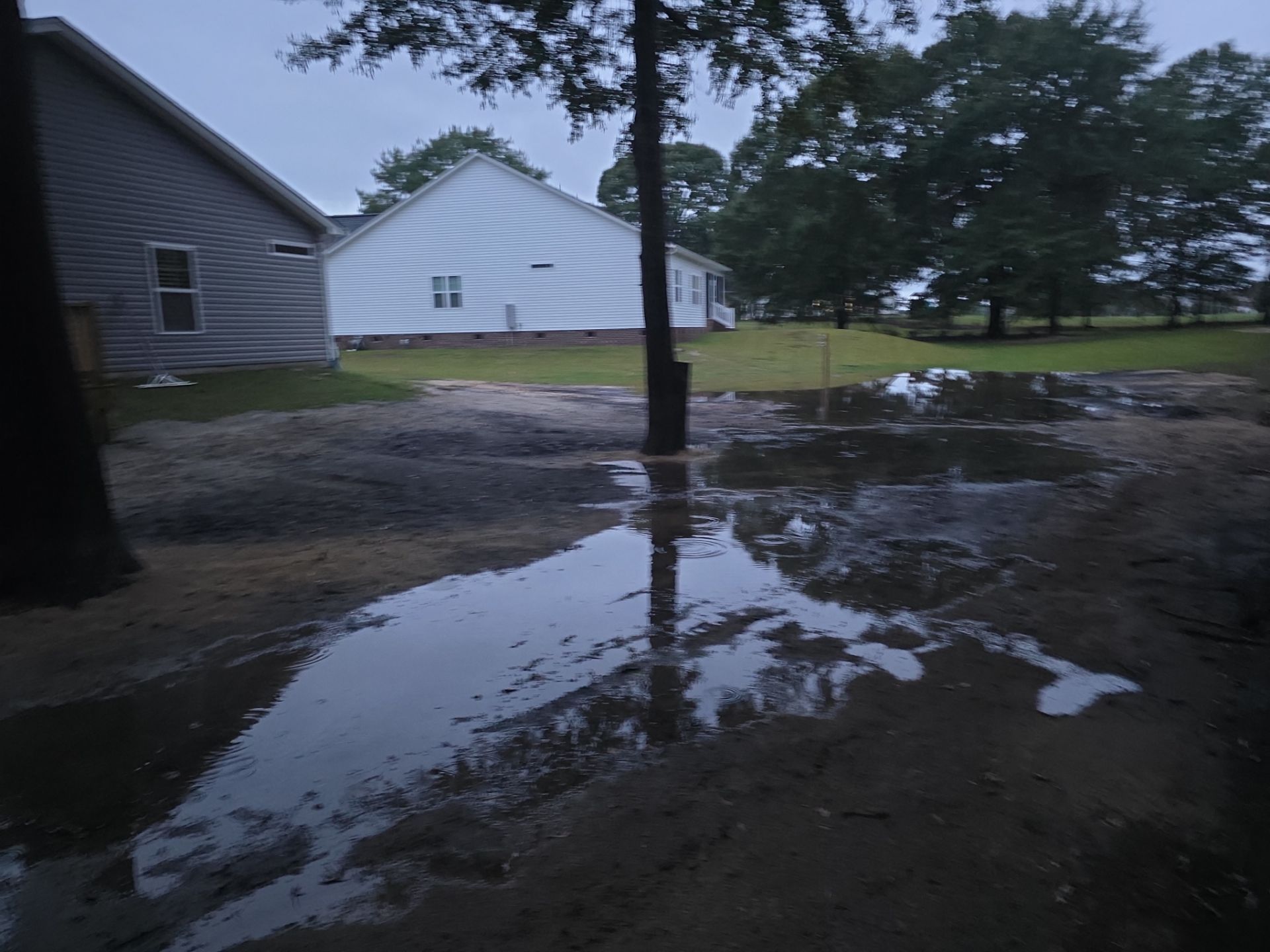
Standing water, soggy lawns, erosion, and water collecting around the home are common landscape problems in Eastern North Carolina. With heavy rainfall, relatively flat properties, varying soil conditions, and large amounts of water coming from roofs and driveways, water does not always have an easy path off a property. The right drainage solution starts with figuring out where the water is coming from, why it is collecting, and where it can safely be directed.
Good drainage starts with proper grading. Water naturally follows the lowest point, so even a small low area in a lawn can collect a surprising amount of water during a heavy rain. In other situations, the grade may actually direct water toward the home, planting beds, patio, or another area where it becomes a problem.
Before installing drains, it is important to look at the elevations of the property and determine whether some of the problem can be corrected through grading. This may involve reshaping portions of the lawn, filling low areas, creating a gradual slope, or establishing a better path for water to travel.
Correcting the grade can sometimes solve the problem by itself. On more difficult properties, grading works together with a drainage system to collect and move the water.
French drains are one of the most common drainage systems used in residential landscapes, but they are not the right solution for every situation.
A properly installed French drain generally uses perforated drainage pipe surrounded by clean stone to collect water within the soil and move it to another location. These systems can work well along consistently wet areas, around planting beds, and in locations where subsurface water is creating soggy conditions.
The location and elevation of the drain are extremely important. Installing a pipe in the ground without understanding how the water is moving can result in a drainage system that does very little.
A good drainage plan considers the source of the water, the slope of the property, soil conditions, and where the collected water will ultimately be discharged.
Sometimes the problem is not water below the ground but large amounts of water moving across the surface.
Catch basins and surface drains can be installed in low areas to collect this water before it spreads across the lawn, planting beds, patios, or other parts of the landscape. The collected water can then be carried through solid drainage pipe to an appropriate discharge area.
Surface drainage can be particularly useful around patios, driveways, hardscape areas, and low sections of lawn where water collects quickly during heavy rainfall.
In many cases, the best drainage system combines several methods. Grading may direct the water toward a catch basin, while underground pipe carries it away from the problem area.
A roof can concentrate a tremendous amount of rainwater into a relatively small area. Homes with gutters can usually collect this water through downspouts and direct it into underground drainage systems or toward appropriate areas of the property.
Homes without gutters can create a different challenge. Water may fall directly from the roof into planting beds or along the foundation, creating erosion, standing water, washed-out mulch, and overly wet soil.
Depending on the property, solutions can include adjusting the grade, creating stone drainage areas, installing open drainage systems, or providing another way to collect the water and direct it away from the home.
The important part is understanding that the water has to go somewhere. Simply covering a wet area with stone or installing a drain without a proper discharge location may not correct the underlying problem.
Some properties do not have enough natural elevation to move water away using gravity alone. When the area collecting water is lower than the available discharge point, a sump pump system may be an option.
These systems collect water in a reservoir or basin and use a pump to move the water through a discharge line to a more appropriate location.
Sump systems can be particularly useful on difficult properties where traditional gravity drainage is not practical. However, they require careful planning because the size of the collection area, pump capacity, discharge location, electrical requirements, and amount of water entering the system all need to be considered.
Like any drainage system, a sump pump should be part of an overall drainage plan rather than simply being added to the lowest area of the property.
There is no single drainage system that works for every property. What looks like the same standing-water problem from the surface can have very different causes.
A successful drainage solution depends on where the water originates, the elevations of the property, soil conditions, existing landscaping, and where the water can safely be directed.
At Croatan Landscaping Company, we look at the property as a whole before recommending a solution. From grading and French drains to surface drainage, roof-water management, and sump pump systems, the goal is not simply to hide the water problem. It is to address the underlying cause while keeping the finished landscape functional and attractive.
We specialize in helping clients increase the value and beauty of their homes by creating elegant outdoor living spaces.